Search Results
Search this site
314 results found with an empty search
- School Board Matters: Student Activism is Front and Center
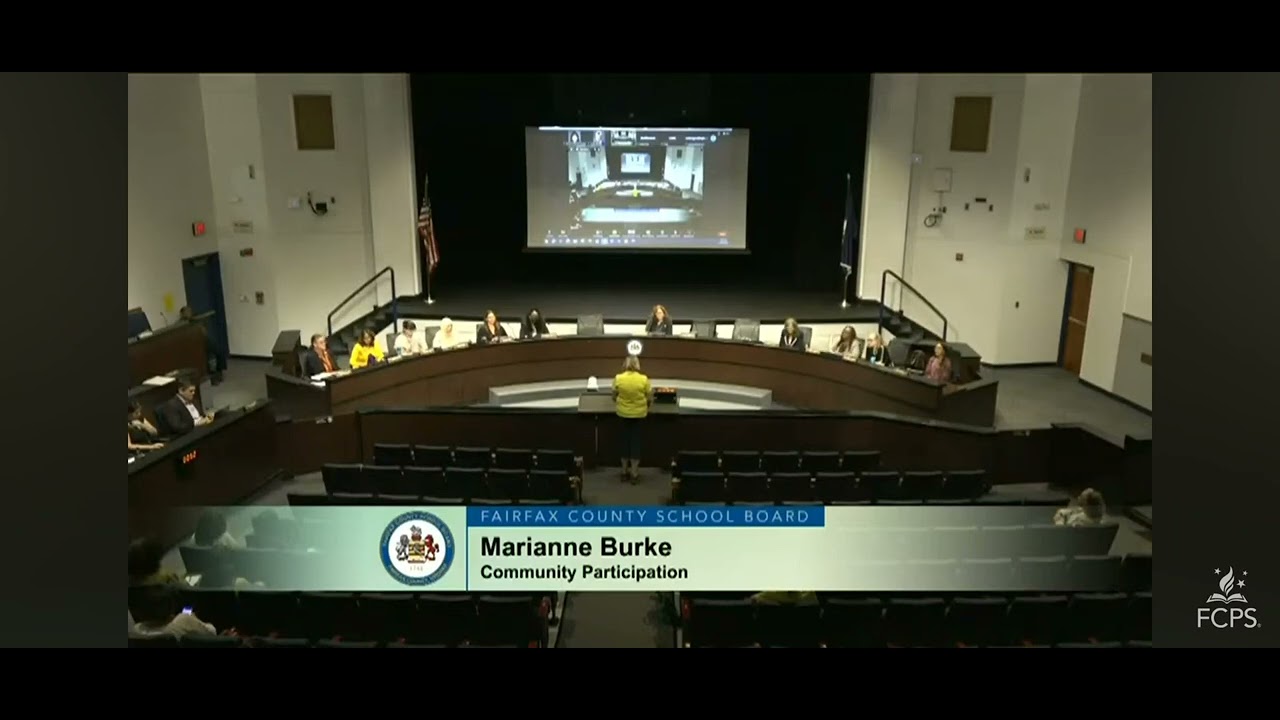
School Board meetings have become ground zero for the culture wars, so 4 Public Education is introducing a new blog called “School Board Matters” for 2023-24. It will include analysis and links to video, agenda, and votes that affect you and your student(s), including links to primary source documents to support involvement in your student’s experience and education. We hope this will provide better access to and understanding of Fairfax County School Board, including their powers and duties, as governed by the Code of Virginia. Although this blog will primarily focus on Fairfax County, we will share school board meeting reports from around the state, as possible. Fairfax County School Board Meeting: September 14, 2023 The 9/14/23 Fairfax County School Board meeting began by commending Mr. Daniel Aminoff for his years of service to FCPS related to facilities planning and capital improvement, and proclamations celebrating Lake Braddock High School’s 50th anniversary and the Virginia School Board Association Business Honor Roll recipients (Children’s Science Center, Greater Washington Partnership, and Real Food for Kids). Public Input Students were on fire! Six students from Langley High School who advocated for making volleyball a varsity sport in FCPS based on high interest level, and immeasurable health and academic benefits. A brave 6th grader from the Climate Change Initiative advocated for reduction in disposable plastic utensils and a return to sustainable utensils, because if one-half of students used plastic utensils every day, it would be the equivalent of two statues of liberty in landfills after a year. (Wow!) Other speakers gave passionate input, including a parent advocating against de facto segregation of Black and Hispanic students who are more likely to be assigned to split-feeder schools. Jennifer Litton Tidd advocated for trusted relationships between students and their school, since 57% of CPS abuse reports come from schools and 77% of child abuse is by parents. She also shared statistics that show that LGBTQIA youth are more likely to be abused, abandoned, or neglected by their parents. A small group of people booed this speech, which was surprising, since one would hope everyone should be against child-abuse and child neglect. There was a speech against book banning, because censorship tends to remove diverse books which results in lack of empathy and othering of marginalized groups. In contrast, there was another parent speech that supported removing Toni Morrison’s Beloved from high school shelves, which included a reading of graphic descriptions of rape and abuse of an 11 year-old child. Although, I strongly oppose book censorship, I was deeply disturbed that an adult would choose to read graphic descriptions of child sexual abuse to an audience that contained dozens of students and adults, many of whom may have personal stories about and trauma from such abuse. I choose not to read books containing scenes of child physical or sexual abuse, because I find them traumatizing, not salacious. The beauty of books is that one can choose what to read or not to read. Being read to in a public meeting removes that choice. Banning books also removes that choice. 4 Public Education founders, Marianne Burke and Vanessa Hall spoke regarding false political claims about the decline in SAT scores and the need to focus on safety and inclusion to enable students to succeed academically and socially, respectively. Finally, there were technical difficulties during both Ms. Burke’s speech and a parent’s video input, the latter took twelve minutes to resolve, so the meeting was adjourned for a short recess. Safety Alert! There was a surprising altercation in the parking lot afterward when a school board candidate blocked Dr. Burke, and then accused her of racism, because her speech shared the well-known bias of SATs against low income test-takers that results in lower standardized test scores. He then went to twitter to push this lie and impugn her character, possibly as a campaign tactic. The full text of Dr. Burke’s speech can be found here. Feel free to determine whether such data should be suppressed as racist. Unfortunately, this was not the only altercation after the School Board meeting; therefore, as we enter election season, please be aware that tensions are heightened. Candidates and their supporters may approach you; however, it is easy to see who has genuine interest or who has ill intent. Here are tips to remaining safe at school board meetings wherever you are: Maintain situational awareness as you enter and exit school board meetings. Be clear about your boundaries. For example, if you don’t want to talk, clearly state that. Be aware that people may be recording you, so behave accordingly and use appropriate language. Ask security or other trusted people to walk you to your car. If something happens, document it immediately and report it to security, as appropriate. School Board Business Following public input came a presentation by Dr. Reid about Compensatory Services for Special Education which covers compensatory services families paid for out of pocket during the pandemic for special education services for 6,266 eligible students. Staff members have worked diligently to assess and implement these services. Families have had to be patient with delays. Student Representative Matters: First, Ms. Karim honored those who were affected by the events of September 11th before launching into discussions of student-led initiatives: Limited availability of STEM activities for students across the county, and the establishment of Technology and Youth Empowerment (TYE) to bridge the gap among elementary schools for STEM opportunities. A compilation of student perspectives on equity and grading and recommendations for change. 45 schools have adopted Community Eligibility Provision (CEP) free lunch access for all students. It is imperative that the rest of the schools in Fairfax County work to adopt this initiative so that no student goes hungry. The need to accommodate midday prayers with dedicated prayer spaces that are free from prejudice or questions by staff. Renaming of W.T. Woodson High School to align the school name with FCPS values. Carter G. Woodson is one figure being seriously considered for the renaming. Superintendent Matters: Dr. Reid introduced the new Chief of Facilities Services and Capital Programs, Ms. Janice Symanski). She also shared a colorful data-filled evaluation of 2023 Opening of Schools for 2023 and announced the 264 National Merit Semi-Finalists who hail from 15 schools–this is the most students Fairfax County has ever had as semi-finalists. The Fairfax County Electoral Board asked that the FCPS school calendar be revised for March 25, 2024, since it is Presidential Primary day (mark your calendars!) since election activities would pose security and logistical interference with student education. School board members described concerns with return to school, including: transportation issues, using instructional leaders to direct traffic at schools, HVAC issues across a number of schools that required chillers and emergency HVAC repairs during the recent heat wave. One member asked why there was not a more detailed report, as they have received previously. Around 11:30 pm, the school board unanimously approved the revisions to the Strategic Governance Manual revisions. It is important to note that this meeting had an hour of proclamations before public input began. An hour. With so many eyes on these meetings, there is universal agreement that these proclamations are taking too long, eating into the valuable time of dozens of citizens, employees, and the work of the school board. Nevertheless, these proclamations are important. Although we need to acknowledge heritage months and celebrate accomplishments of students, adults, and groups in our school system, we also need to respect everyone’s time. It would be great if the school board could consider the length of their public comments.
- School Board Matters: Call for Advisory Committee Volunteers
School Board meetings have become ground zero for the culture wars, so 4 Public Education is introducing a new blog covering Fairfax County School Board meetings called “School Board Matters” for 2023-24. It will include analysis and links to video, agenda, and votes that affect you and your student(s). Where possible, we will provide links and primary source documents to support involvement in your student’s experience and education at FCPS. We hope this will provide a better access to and understanding of Fairfax County School Board, including their powers and duties, as governed by the Code of Virginia. Fairfax County School Board Meeting, August 31, 2023 August 31, 2023 marked the first Fairfax County School Board meeting of the 2023-24 school year that began after the dedication of the Family Resource Library in honor of Dr. Larry Bussey, a civil rights powerhouse who was a founding member of the Minority Student Achievement Oversight Committee and championed the re-examination of curriculum and improved outreach to parents. The meeting was a doozy in terms of public comment. Seven speakers–including three confirmed parents, one candidate, and a grandfather who has sued FCPS–supported Youngkin’s anti-trans model policies, used dehumanizing anti-LGBTQIA rhetoric, spoke of grooming, and/or challenged transgender students’ civil rights. In one speech, a costume was involved. At least one of these speeches used ableist language that devalues those who have disabilities. As a mom and active volunteer in FCPS and my church, I found these comments to be discriminatory and harmful to students. In fact, they made me weep. A fellow mom in the audience was upset to learn that her child had listened to these speeches, as she was waiting to speak. In truth, the comments above were out of line with views in the United States where only 10% strongly oppose protecting transgender people from discrimination; however, these numbers are shifting dramatically in light of culture wars that use the transgender community as pawns. Additionally, these polls neglect to focus on the voices of those who are directly impacted by such discrimination: transgender students and their families. In contrast, three parents and an FCPS alumnus spoke in support of transgender and non-binary students, rejected anti-trans rhetoric and bullying, and spoke of the need for inclusivity in FCPS for all students. Attempts to create division and sow fear demonizing queer students and staff will fail because they are baseless. It is important now more than ever to stand strong against weaponized politics aimed at our children. Children in general have little to say in their day-to-day lives. Kids, like transgender kids, are even more vulnerable when attacked or demonized by adults who should know better. - Public input from parents supporting transgender students Other comments covered the need for increased executive functioning skills instruction in elementary school to help students with self-control, use of federal pandemic relief funds for Free and Appropriate Public Education (FAPE), and a demand by an at-large school board candidate for an apology from the current school board regarding their efforts to protect children and teachers during the pandemic over two years ago. The agenda of items discussed and voted upon by the School Board, include: Strategic Plan Update and other Academic Matters from Superintendent Dr. Reid Student Representative input from Ms. Karim who shared that September is Suicide Prevention Month, described concerns raised by students about unpredictable grading structures that differ among classes and schools, and disparity in access to free lunches. Action Items included long discussions about and approval of: year-end review of FY 2023 accounts, School Board committee assignments, School Board meeting calendar, and revisions to hearings and appeals procedures. The Board approved several Consent Agenda items, including Family Life Education Curriculum Advisory Committee (FLECAC), Audit Committee Community Participant appointments, and other Advisory Committee appointments. School board committees are a great way for parents, guardians, students, and other Fairfax County citizens to be involved in and provide input to FCPS–apply today if you have relevant experience and there are openings. In new business, they discussed the Challenged Materials Committee among other items. The entire meeting ran for three hours from 7-10pm.
- Don't Be Fooled into Thinking that FCPS is Failing
All these school board seats are up for election this November, and you can tell things are heating up because false claims are circulating about this current school board. One false claim is that the decline in SAT scores shows that Fairfax County Public Schools are failing, and the claim suggests that this will lead to a drop in property values in the county. This lie is on the website of one of Fairfax County political parties. But school districts across Virginia, in other states, and around the globe had similar declines in SAT scores between 2018 and 2022, and Fairfax County students perform above both the state and global SAT averages. Rather than blaming the decline in SAT scores on ones’ opponent, candidates should recognize other factors that influence SAT scores. Fewer students now take the test compared to in the past. Only ¾ of the students nationwide took the test in 2021 compared to 2020. 80% of colleges and Universities no longer require SAT scores with applications. So fewer students are reporting their scores to colleges, and fewer students are retaking the test for a better score, Also, there is a shift in the profile of students taking the test. Free and more accessible testing has allowed more students from lower-income families to take the test, and data show that these students tend to score lower than those from higher income families. And students who do not plan to attend college are now taking the test because it is free and during the school day so why not? Fairfax County is part of a nationwide movement to de-emphasize entrance exams within the college admissions process.” Don’t be fooled into thinking FCPS are failing. If you would like to learn more about this subject, please see Marianne Burke's full blog on the subject.
- A Teenager's Perspective on Suicide Prevention
Hi, my name is Megan, and I am a teen advocate for suicide prevention and mental health awareness. Earlier this year, I shared my thoughts on how parents can help prevent suicide and support their kids at the 5/25/23 Fairfax County School Board meeting, but today, during Suicide Prevention Month, I will get more personal. When choosing a Girl Scout Silver Award topic, I wanted to do something that I could relate to, and genuinely understand. I’ve always been a strong believer in not judging people’s coping skills, especially if you have never been in their shoes. That being said, I have been through something that no one should ever have to go through, and it is my mission to bring awareness to youth around Fairfax County that they are not alone, and there is someone who does indeed get it. I am not just writing this to bring awareness to this very important topic, but also to help bring closure to myself. Suicidal thoughts is something I do not wish upon anyone, as it is very difficult to deal with, especially as a child. When I was 11-12 years old, I was deeply suicidal due to my mother’s death earlier in 2020. My suicidal thoughts first bubbled up during a Florida vacation in August 2020. I am forever traumatized by the PTSD I have from that trip. I remember it like it was yesterday: having multiple panic attacks not knowing what was going on, and even hitting myself to try and get the bad thoughts out. I was 11 years old, so I still didn’t really know what was going on in my head and body, but I was terrified. Today, I genuinely believe if it weren’t for that nurse on the other end of the phone during our family trip to the aquarium, I wouldn’t be here today. I wish I knew her name just to thank her for her genuine act of kindness. I have yet to go back to Florida due to the remembered trauma. My experience shows how young and innocent someone can be, yet still have these thoughts, even if they don’t know what they are. This is why we need better mental health education and support in our schools and everyday society. If I had known there was proper, readily accessible help, I wouldn’t have been as scared to tell someone–I even was petrified to ask my dad for help. We need mental health support and education as early as late-elementary school. During my first mental health crisis, I was a rising 6th grader. No 6th grader should ever have to go through that, feeling trapped and alone. No one should ever feel like that. I’m here to stand up for this, because if I don’t, who will? We need change now. When I was suicidal, there were a only three people who, I feel confident in saying, that if it wasn’t for them, I wouldn’t be here today. I will forever be grateful for Eliza, my rock, my lifesaver, and built-in best friend. Every 1 am phone call I made, she answered whether she was sleeping or not. Throughout her busy schedule, she would still find time to talk to me and listen to me wail. Nights were the hardest, so most nights we would fall asleep on the phone and she wouldn’t hang up until she knew I was asleep. She is genuinely one of the most selfless and compassionate people I know. The other two people who I love dearly, and have slowly started to open up as to what truly happened during that time, are my Aunt Lana and Uncle Mickey. They are both my mom’s siblings, so they sort of understood what I was dealing with, as they were also going through a big loss, the loss of their baby sister, my mom. However, with that being said, they still didn’t know the full situation. They probably assumed I was suicidal, but I never told them because I was so scared. I was scared they wouldn’t believe me, tell my dad, or send me to a mental hospital. I didn’t say anything to them until well after I started feeling better. The upside of what I’m trying to say is that there is someone there for you and that you’re not alone. Never feel like you’re the only one who feels this way, because there is most definitely someone else who is experiencing something similar, and someone else who is willing to listen. You’re not alone. (Side note: if Aunt Lana, Uncle Mickey, or Eliza is reading this, I love you so much. Words cannot express how grateful I am. Thank you for helping me when you could’ve easily walked away. You’re the reason I’m still here, and I am so so grateful for this life. I’m so sorry if I’ve never said that I’ve just been scared and have never known how to or when.) Today, I find that it hasn’t really gotten easier, I just got stronger. It’s like exercising: the workout never gets easier, you just get stronger and are able to work through it better. It is kind of like a quote I like: A new mind doesn’t go back to old dimensions. It means that when you’ve survived something, you have survived and you will continue to survive. Survival helps your brain know how to fight off those bad thoughts, since it knows what they are and what damage they are capable of doing (kind of like the covid vaccine fighting the virus!) With everything said here, don’t forget that your loss happened. Acknowledge the pain. You survived and are still surviving. You’re undefeated. Keep fighting. I’m Meg, a teen advocate for suicide prevention and awareness, and I’m here to say, “You’ve got this. I’m so proud of you for still being here. Your life is worth living, even if it doesn’t seem like it right now. You will get there, I promise.” I’ve been at rock bottom, and I’m still standing. I am living proof that you can dig yourself out of a dark place with the love and support of others. On the other end of loss, you can still be an amazing human being, and in most cases, an even better one. If you are a parent of a high school student who would like to know more about the free online teletherapy services offered through FCPS, please check this link. Additional mental health resources in Fairfax County and in public schools can be found here. Photo credit: https://www.fairfaxcounty.gov/news/september-suicide-prevention-month
- An Apple for this Educator
Earlier this month, representatives for 4 Public Education met with Dr. Michelle Reid, the new superintendent for Fairfax County Public schools to discuss our programs, concerns and our commitment to working with her to confront the challenges facing our schools and to help our schools reach new heights. Several of us had already become familiar with the superintendent through participation at school board meetings and attending one of the many “listening sessions’ she is holding throughout the county. We were impressed. Early in our meeting she apologized as she read an urgent text. Another student at one of our high schools had overdosed and needed medical care. Dr. Reid explained her extreme concern with the numbers of students overdosing, and the availability of drugs at our high schools. We don’t have the necessary treatment bed for adolescents in our county. We have little support for students with addiction problems. This issue must be addressed. While this isn’t only an issue at our schools, it is an issue in our schools and our government should be working together to ensure every child gets the help they need as a baseline to protecting and educatiing our children. Dr. Reid also noted that since she’s been on the job she’s discovered that only 37% of income eligible children are enrolled in our pre-K programs. The issue isn’t due to funding—it’s due to a lack of space. Federal money is available for these programs. It is unconscionable that is a county as wealthy as Fairfax, and with so much empty commercial space, we have any children not in a pre-k program as these programs are the great levelers for all kids—ensuring that our children start kindergarten on a more level field. We can’t have the equity envisioned by the One Fairfax initiative if our youngest and most needy residents aren’t getting the lift up they need to succeed in school. She is setting her expectations for academic standards at a high level and has set clear goal for the system to ensure they are achieved. She also talked about the need to reinvent our conception of education as the careers many of our children will have don’t even exist today. Our world is moving so fast we need to become creative in the methodology of education so that we are teaching children skills that will be applicable for their work experience in the decades to come. As you would expect of any great teacher, she took complex concepts and, on a sheet of paper drew diagrams for us to make her points clear. When I pushed back on her resolve that all kids should learn algebra, noting that some kids may not be ready, she showed me, with grace, an algebraic equation that kindergarteners could solve. Dr. Reid is an intellect, a gifted listener, a bridge-builder and an educator committed to the ideal the every child in FCPS can and should excel. Our students are in good hands. Read Dr. Reid's weekly reflections here. Follow Dr Reid on Instagram Learn more about opioids in Fairfax County and how to get help here. Information and resources on FCPS early childhood education programs. Learn more about advocating for early childhood education and school readiness in Fairfax County.
- Responding to a Right-wing Hatchet Job
On May 19, Governor Glenn Youngkin, Secretary Aimee Guidera, and Superintendent Jillian Balow held a press conference to release their report on education in Virginia. The themes in the 34 page report maintained that Virginia schools had “sporadic sharing of data, lowered expectations, and declining achievement.” The team put forward that Virginia schools were in such “alarming” shape that a serious re-alignment and changes they are prepared to make must be implemented. It was a shocking report for a state that has consistently been ranked in the top five in the country for performance in spite of the legislature’s continued underfunding (Virginia is 41st in funding). Unfortunately, the data used to produce the report was such a mis-matched collection of disconnected data points and inflammatory language that it is nearly impossible to connect the report to any reality about Virginia schools, students, or parents. A fact-check list of their incorrect assertions would be as long or longer than the report itself. For instance, the report uses percentage drops in individual NAEP test results without referencing that Virginia’s scores on those tests are higher than the national average. Much of their case uses recent Covid impacted scores that exist for all states and nations, juxtaposed with long discredited ideas about standards, testing, accountability, and rigor that have been debunked by the results of the very tests the Governor’s office seeks to use. The NAEP test which Gov. Youngkin’s administration puts forward as the standard of data, shows that 25 or more years of push to more testing, more rigid evaluations, and more school privatization has neither closed achievement gaps nor improved performance. Simultaneously, they ignore the need to fully fund Virginia’s public schools and provide badly needed infrastructure updates to facilities. Yet, Gov. Youngkin, Sec. Guidera, and Supt. Balow use old ideas from groups like Achieve, formed to push Common Core and more testing, as evidence that Virginia is not doing well. It is deeply disturbing that Gov. Youngkin and his team remain committed to using old failed ideas from commercially motivated sources to make their case to disrupt and dismantle one of the greatest school systems in the country.
- Strings of Lies
Before we begin, please take the following multiple choice exam: On November 17th, when the Virginia Superintendent of Schools presented the state Board of Education with her revisions to the proposed Social Studies and History Standards of Learning for grades K-12, which entity called these changes, “hastily and irresponsibly prepared” and “flawed”? A. The Virginia Education Association B. The Senate Majority Leader C. The contractor who wrote the revision for the Department D. 4 Public Education If you guessed C). “the contractor,” you would be correct. Yes, the document she prepared was so unprofessional, lacking in important details, lacking in appropriate organization that, after a scathing 4-hour public hearing, she wrote a letter of apology for her shoddy work. She did manage to try to excuse her performance at the hearing by taking a dig at the 100s of citizens who drove for hours or wrote an email to plead with the Board not to accept these changes. She branded these activists as part of an “organized political attack.” The word “snowflake” comes to mind. The speakers included students from the College of William & Mary and University of Richmond asking the Board to reinstate the work on Martin Luther King and the civilizations of Africa into the curriculum as they did not see any people who looked like them in a history lesson until they got to college. An Asian activist broke down while testifying about her sense of otherness in the proposed curriculum as Asian Americans were largely excluded. A native American shamed the Board by noting that, despite the rhetoric in the proposed draft, he and his tribe are not “the first immigrants,” but rather, we were all convening the meeting on land that had belonged to his tribe. The morning of testimony was emotionally rich, personal and compelling. It’s quite telling that all this professional heard was cynical noise. The objections to the draft ranged from leaving out entire cultures that helped build the nation, to adding complicated and inappropriate lessons, to simple mistakes of basic grammar. The Commonwealth requires our children to sit for hours and memorize rote facts for standardized testing we call the “Standards of Learning” or the “SOLs” In the past two decades these tests have become ubiquitous and, many would argue both inequitable and counter-productive to a vibrant, creative, welcoming teaching environment–both for the students and the teachers. The Virginia Department of Education is charged with revising the SOLs every 7 years to keep pace with new priorities in education and to undo the biases that creep in. This year with the naked weaponization of testing to indoctrinate our children with an extreme Eurocentric bias, and whitewashing the contributions of people of color, AAPI and other cultural roots of American history, we should all take a look at what we gain and what we lose by championing these tests. The test companies make millions and they employ highly paid lobbyists to Richmond to ensure this business keeps expanding. As parents and community members we should be asking ourselves if these tests, especially at the elementary school level, bring more value than harm especially if they are now being used as tools of bias and inequity. Despite being almost 6 months behind in the revision process, the Board of Education did not adopt the proposed draft. Instead, it directed the Superintendent to go back to an earlier version that hundreds of experts worked on for over two years and to work with both that, and whatever she can glean from her proposal and present the Board with a new option. 4 Public Education will be watching and we stand ready to act when the new proposal is made public.
- Did We Win? It depends on who you ask.
On Tuesday June 20, Virginians went to the polls in the preliminary stage of electing a new legislature. There are 140 seats in the Virginia legislature: all are up for election in November. Of those 47 were on the ballot Tuesday. Thirty-one were Democratic and sixteen were Republican. A large number of the state’s local school board and county board races are also in play this year, but most of those are happening in other non-partisan selection processes. Trying to make sense of the many reports covering the Virginia primaries is like coming into a competitive ball game in the 4th inning. Lots of people want to predict who will win in the end and make sense of the first four innings of play, but much of the discussion is slanted based on which team you are rooting for. Lots of Glenn Youngkin fans are touting that he won ten out of ten on his endorsements, but that overlooks that most of the Republican candidates were pre-selected in closed local conventions, and he did not endorse a candidate in nine of Tuesday’s Republican contests. It also ignores that when conservatives invested resources to exert influence on outside races, such as the three Northern Virginia states attorneys races, they failed. Progressive organizations are similarly pleased with their victories, like Emerge Virginia that promotes women candidates counting they now have 50 Emerge trained candidates in or running for the legislature in the fall. Similarly, Moms Demand candidates came out victorious in tough races in Northern Virginia. So what do the results of Tuesday’s elections predict for our children and their schools? Much as pro-public schools voters would like to cheer the departure of radical anti-schools candidates like Dave LaRock, Amanda Chase, and Tim Anderson, sadly the opponents who beat them may be less flamboyant, but they are just as radical in their voting records and position statements. So, though Republican candidates may be toning down the rhetoric around schools, they are not moving toward the center in their policy goals. For instance, Glen Sturtevant who beat Amanda Chase, voted in the past for all the same anti-schools bills and policies that she did. Also, unlike his opponent, Wren Williams did not brag about being at the January 6th insurrection, his website includes a tab insisting that “school choice” is the solution for rural education. On the Democratic side, there is a mixed bag of socially conservative Dems who lost, and new strong public school proponents who didn’t make it. Certainly, more conservative Dems like Chap Petersen and Joe Morrissey paid for movement too far into right field, but in Prince William County Ben Litchfield, a strongly pro-schools House candidate also didn’t succeed in the primary. Overall, we will need to play it out, and see what the score is in the last inning in November. What’s most important as voters is that we ask every candidate to support public money for public schools, and to provide adequate resources for all children of Virginia.
- Inspirational 2023 Women's Summit
It is hard to describe how inspired we felt after last weekend's 2023 Network NOVA Women's Summit after: Rubbing elbows with those who make legislation to support, protect, and educate our students. Listening to those who are changing the education landscape by ensuring that we fully fund public education, empower citizens, and engage rural communities. Hearing stories of the culture wars that are overwhelming our beloved local schools and communities. Learning how to support our students, educators, and families through focused action and messaging strategy. Since it is hard to capture inspiration, we made a short video. Enjoy. Many thanks to Network NOVA for their leadership and coordination of this event, and great appreciation to all of the speakers, sponsors, and attendees who made this event so great.
- With the Truth, We will Win
Hi, My name is Emily Ocasio and the last time I was speaking here it was the 2nd annual women’s summit and I was just 14. You may remember, I shared a poem titled “I can’t vote, Here’s why you should.” Now I am here again, 18 years old and I just recently voted in this year’s democratic primary and I can't wait to vote in my first election. I’m also looking forward to heading to college in the fall, but as a student one of the things I’m most afraid of is the current attack on education. They aren’t just banning books, they are censoring teachers, editing curriculums, and defunding public schools. They are making higher education harder to obtain by being against relief for student loans, by removing affirmative action, and by keeping college unaffordable for most. They don’t really believe that college or education is unimportant, they KNOW how important it is, that's precisely why they want to keep US from going. But at the same time they are preparing the next generation of Kavanagh's, Ted Cruzs, Josh Hawley, all of whom went to schools they would claim are "breeding grounds for woke elitism" (Yale, Princeton, Stanford). Remember that a republican senator called Obama a “snob” for wanting to make higher education more accessible? The colleges that they want to convince you are bad for your kids, are their training grounds for their next lawyers, lobbyists, politicians, and supreme court judges. The ones who are going to be on the front lines of the battle against our rights. So at a time when education is under attack, seeking truth is revolutionary. Since I spoke last, I’ve been working on a lot. Until recently, I served as the CEO of a 501c3 nonprofit which helped empower marginalized students to pursue STEM careers. I also learned how science and technology helps us understand the world we live in. I used artificial intelligence to analyze millions of newspaper articles and look at the language used to describe homicide victims. I found that, in fact, the use of humanizing language to refer to the victims was related to the race, gender, and age of the victims. For example, black boys were 30 percentage points less likely to receive coverage that was humanizing than white children. I care about STEM and research and the scientific method, because it's one way I’ve learned to find truth in the world around me. But there are many ways to find the truth, and they are systematically hijacking all of them: We find truth in science, being pro life seems may seem more logical if you think someone can only be impregnated if they are consenting to the sex. We find truth by learning how to think and question from teachers who aren’t criminalized by teaching the curriculums they believe in. We find truth in history, which is why they are so afraid of AP African American history, and critical race theory. We find truth when we are able to go to school without living in fear of being harassed for our genders or sexualities, of being infected with a virus that could kill us, or of being slaughtered with an assault weapon. We find truth in stories, we are pushed the most by the ones that leave us uncomfortable, which is why banned books matter. I am proud to stand here, as a person who seeks truth, in a room of my fellow revolutionaries, because: We are the party of science when others are trying to spread misinformation. We are the party of openness when others are the party of banning books. We are the party of the truth when others are the party of fake news. Truth is the most powerful weapon we have. And only with the truth, will we win. Emily Ocasio gave this speech during the Change Makers Brunch at the 2023 Women's Summit. Emily is an accomplished 18-year old who will be heading off to college this fall. She leads the program operations of the Girls Computing League when she is not working to change the world.